



Hello, I’m Shishido.
- Government Plans Major Revisions to Income, Pension, Japanese-Language, and Spousal Requirements in Permanent Residency Screening
- Significant Strengthening of Financial Requirements Relating to Income, Pensions, and Assets
- Japanese-Language Ability and Adaptation to Japanese Society May Become Important Screening Factors
- Major Extension of the Special Permanent Residency Rules for Spouses of Japanese Nationals and Permanent Residents
- Understanding of Japanese Systems and Daily-Life Customs, Including Children’s Compulsory Education
- Required Period of Stay
- When Will the New Standards Take Effect?
- What Will Happen to People Who Have Already Applied for Permanent Residency?
- Summary
- Sources
- Contact Us
- 044-379-8319
Government Plans Major Revisions to Income, Pension, Japanese-Language, and Spousal Requirements in Permanent Residency Screening
On July 25, 2026, it was reported that the Japanese government had prepared a draft proposal to revise the “Guidelines for Permission for Permanent Residence,” with the aim of substantially tightening the requirements for foreign nationals seeking permanent residency.
Under the proposed revisions, applicants would be examined more strictly than before, not only in terms of their length of residence and tax-payment history, but also their long-term financial stability, Japanese-language ability, understanding of Japanese social rules, and their children’s school attendance.
Please note that, as of this writing, the government and the Immigration Services Agency of Japan have not yet officially published the final version of the revised guidelines.
The following is therefore a provisional explanation based on information reported as of July 25, 2026.
Significant Strengthening of Financial Requirements Relating to Income, Pensions, and Assets
One of the legal requirements for permanent residency is:
“The applicant must possess sufficient assets or skills to make an independent living.”
Under the current guidelines, applicants must be able to live without becoming a public burden, and their assets, professional skills, and other circumstances must demonstrate that they can maintain a stable life in the future.
Even under the current system, financial stability has been examined quite strictly by considering factors such as:
- The applicant’s income
- The number of dependent spouses and children
- Total household income
- Employment status
- Employment history
- Frequency of job changes
However, the proposed revisions are reportedly intended to clarify the requirement that applicants must be capable of supporting themselves over the long term.
As a general rule, applicants may be required to have financial conditions equal to or higher than those of Japanese nationals.
The following standards are reportedly under consideration.
Income Exceeding the Average Annual Income of Japanese Households
Applicants may, in principle, be required to earn more than the average annual income of Japanese households.
However, the following details remain unclear:
- Which year’s average Japanese household income will be used as the benchmark
- Whether the required amount will be adjusted according to the number of dependents
- Whether regional differences in living costs will be considered
Incidentally, the current average household income in Japan is approximately JPY 5.24 million per year.
Expected Pension Benefits Equivalent to 30 Years of Employees’ Pension Enrollment
One of the most notable points in the recent reports is the government’s plan to include the estimated amount of pension benefits that an applicant is expected to receive in the future as part of the permanent residency screening process.
According to the reports, applicants may, in principle, be required at the time of application to have an expected pension benefit amount equivalent to that of a person who has been enrolled in Japan’s Employees’ Pension Insurance system for 30 years while earning an average Japanese income.
However, it is not yet clear what exactly is meant by the term “expected pension benefit amount.”
At this stage, it is impossible to determine whether applicants will actually be required to have been enrolled in the Employees’ Pension Insurance system and paid contributions for 30 years, or whether, for example, a person who has worked for 10 years with an annual income of approximately JPY 5.5 million could be assessed as likely to continue earning a similar income and therefore expected to receive a sufficient pension in the future.
If the standard is interpreted as being based on the applicant’s actual enrollment period and contribution record, a person earning approximately JPY 5.5 million per year would generally need to remain enrolled in the Employees’ Pension Insurance system and pay contributions for approximately 30 years.
Concerns
- Many foreign nationals who come to Japan after the age of 40 will be unable to build up 30 years of pension contributions.
- It is unclear how people enrolled in the National Pension system, rather than the Employees’ Pension system, will be treated.
Japanese-Language Ability and Adaptation to Japanese Society May Become Important Screening Factors
Permanent residency requires that:
“The applicant’s permanent residence is considered to be in the interests of Japan.”
Under the current guidelines, the main factors used to assess this requirement include:
- Having resided in Japan for at least 10 years in principle
- Properly fulfilling public obligations
- Having no record of imprisonment or fines
- Holding a sufficiently long period of stay
Under the proposed revisions, the concept that applicants must make an “active and concrete contribution to Japan” may be added.
The government is reportedly considering examining applicants’ adaptation to Japanese society more strictly.
Japanese-Language Ability Above a Certain Level
According to reports, the required Japanese-language level may correspond to an “independent user” under an international language-proficiency framework.
This would mean more than being able to exchange simple greetings or complete basic shopping transactions.
Applicants may be expected to possess sufficient practical Japanese-language ability to independently manage daily and social life in Japan.
However, it remains unclear:
- Whether JLPT N2, N3, or another level will be required
- Whether passing a recognized Japanese-language examination will be mandatory
- Whether an interview or a separate examination will be used
- Whether exemptions will be available based on age, disability, or educational background
Therefore, it cannot currently be stated that JLPT N2 or any other specific qualification will definitely become mandatory.
The details will need to be confirmed once the government formally announces the new standards.
A Program for Learning Japanese Culture and Rules of Daily Life Is Also Under Consideration
In addition to Japanese-language ability, the government is considering introducing a program through which foreign nationals would learn about:
- Japanese culture
- Japanese social systems
- Laws and administrative procedures
- Taxes and social insurance
- Rules concerning changes of address or employer
- Local community rules
- Children’s education
- Disaster preparedness
The government reportedly plans to begin a comprehensive program covering the Japanese language, Japanese culture, and social rules as early as fiscal year 2027.
It has also been reported that participation in the program may be made mandatory when applying for permanent residency or certain other statuses of residence.
However, the following details have not yet been officially determined:
- The exact content of the program
- How applicants will attend
- Whether an examination will be required
- How completion will affect immigration screening
Major Extension of the Special Permanent Residency Rules for Spouses of Japanese Nationals and Permanent Residents
Under the current Guidelines for Permission for Permanent Residence, the spouse of a Japanese national, permanent resident, or special permanent resident may qualify for an exception to the general 10-year residence requirement if:
- The genuine marital relationship has continued for at least three years; and
- The applicant has continuously resided in Japan for at least one year.
In simple terms, an applicant may currently apply for permanent residency without having lived in Japan for 10 years if both of the following conditions are met:
- The genuine marriage has continued for at least three years.
- The applicant has continuously resided in Japan for at least one year.
However, according to the reported proposal, these special conditions may be extended to:
- A genuine marital relationship lasting at least five years
- Continuous residence in Japan for at least three years
If implemented, this would delay permanent residency applications for many spouses of Japanese nationals or permanent residents by several years.
Understanding of Japanese Systems and Daily-Life Customs, Including Children’s Compulsory Education
For households with school-age children, whether the children are attending a Japanese elementary or junior high school may also become a factor in permanent residency screening.
If parents fail to ensure that their school-age children receive an appropriate education without a legitimate reason, this may be viewed negatively from the perspective of:
- Adaptation to Japanese society
- Fulfilment of parental responsibilities
- Understanding of Japanese rules and systems
However, in my view, children’s school attendance has already been considered to some extent under the existing screening process.
It is still unclear how the following types of education will be treated:
- International schools
- Foreign-national schools
- Online education provided by the child’s home country
- Homeschooling
- Other alternative education arrangements
Further official clarification will be necessary.
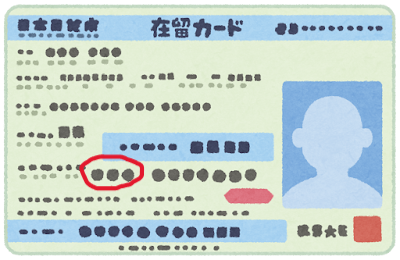
Required Period of Stay
Until now, applicants for permanent residency have generally been able to satisfy the period-of-stay requirement if they held a three-year period of stay.
From April 2027 onward, applicants may be required to hold a period of stay of five years or more.
This refers to the period of stay stated on the applicant’s residence card.
When Will the New Standards Take Effect?
According to some reports, the government is considering the following implementation schedule:
- Financial requirements, including income requirements: from October 2026
- Other requirements: from April 2027
However, it will be necessary to confirm:
- The government’s official announcement
- The revised immigration guidelines
- Any public-comment procedures
- Transitional measures
- The treatment of applications submitted before implementation
What Will Happen to People Who Have Already Applied for Permanent Residency?
One of the most important unresolved questions is which applications will be subject to the new standards.
Possible approaches include:
- Applying the new standards only to applications submitted on or after the effective date
- Applying the new standards to applications submitted before the effective date
- Establishing a transitional period during which the previous standards continue to apply
The effect on applicants will vary significantly depending on which approach is adopted.
This is particularly important for:
- People whose applications are already under examination
- People planning to apply within the next several months
- People who currently satisfy the existing requirements but may not satisfy the proposed requirements
According to reporting by the Asahi Shimbun, the new income standard may be applied retroactively to applications submitted from April 2025 onward.
However, this information should be treated cautiously until the government formally announces the applicable rules.
Summary
If the proposed revisions to the permanent residency guidelines are implemented, it may become significantly more difficult to obtain permanent residency merely by:
- Living in Japan for a long period
- Paying taxes
- Paying pension and health-insurance contributions
The following points remain particularly important and unresolved:
- The specific amount that will be treated as the required “average income”
- How expected pension benefits will be calculated
- Whether National Pension participants will be treated differently
- How Japanese-language ability will be evaluated
- Whether a specific JLPT level will be required
- How children’s school attendance will be assessed
- Whether the new standards will apply to pending applications
- Whether transitional measures will be introduced
People considering permanent residency should not give up solely because of media reports.
At the same time, they should not assume that the current standards will remain unchanged.
It is important to calmly review the final guidelines and transitional measures once they are officially published by the Immigration Services Agency of Japan.
This article is based on media reports and the current Guidelines for Permission for Permanent Residence published by the Immigration Services Agency of Japan as of July 25, 2026. It does not guarantee the outcome of any permanent residency application.
Sources



Contact Us
Please feel free to contact us through whichever method is most convenient for you.